SUS 304 vs SUS 316L: When to Pay More for Stainless Steel
Dairy plants get away with 304. Citrus juice plants need 316L. Here's why — and how to spot a supplier who's substituted cheaper grades into your line.
Two grades of stainless steel dominate food and beverage equipment: SUS 304 (also called 18/8 — 18% chromium, 8% nickel) and SUS 316L (16% chromium, 10% nickel, plus 2–3% molybdenum, low carbon). They look identical. They're priced very differently. And in the wrong application, the cheaper one will cost you a fortune in early replacement.
What the molybdenum buys you
The 2–3% molybdenum in 316L gives it dramatically better resistance to chloride corrosion and acid attack. That's it. That's the whole story.
For most dairy applications — milk, cream, yogurt, cheese — there's not enough chloride or acid to matter. SUS 304 holds up perfectly well for 20+ years.
For citrus juice, tomato products, salty brines, or anywhere you're using strong acidic CIP chemistry — 304 will pit and corrode within 2–5 years. You need 316L.
When 304 is fine
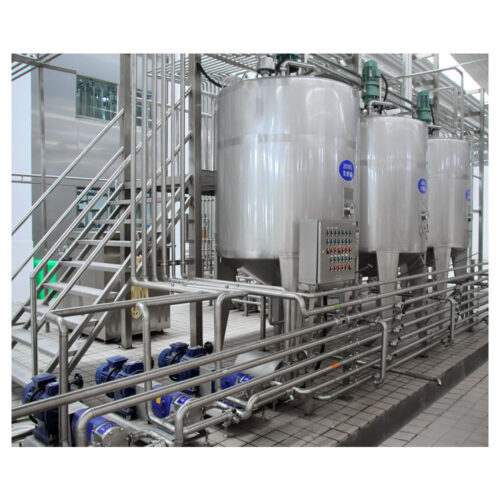
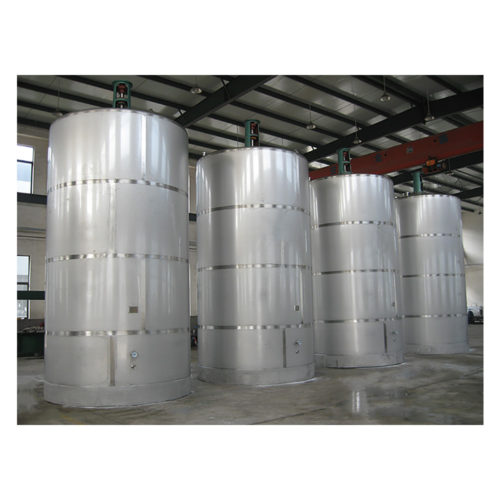
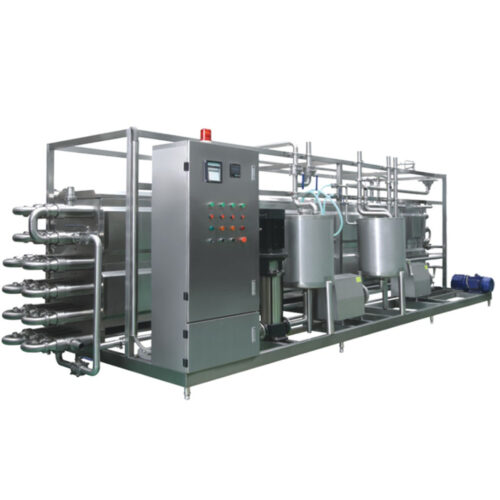
- Milk reception, storage, pasteurization, cooling tanks
- Yogurt fermentation tanks (pH stays above 4.0)
- Beer brewing equipment (pH 4.0–5.0)
- Water treatment, RO/DI tanks
- External cladding, jacket sheets, pipe supports
- CIP tanks (the chemicals don't sit, they recirculate)
When you need 316L
- Citrus juice (orange, grapefruit, lemon, lime) — pH below 4, high citric acid
- Tomato paste and ketchup — high acidity plus high chloride
- Pickles, sauerkraut, kimchi — high salt content
- Salad dressings, mayonnaise — vinegar exposure
- Anywhere seawater might come into contact
- Concentrated CIP at high temperature with chloride-containing water
The grey areas
Apple, pear, mango juice: Mildly acidic but not aggressive. 304 works for the press, but use 316L for the pasteurizer plates and any holding tank where the juice sits hot for more than 30 minutes.
Drinking yogurt and flavored milk: If you add fruit purees, the acidity goes up. Use 304 for the milk side, 316L for the fruit handling.
Beer: Lager and pilsner are fine on 304. Sour beers, gose, and anything fermented with brettanomyces or lactobacillus need 316L for the fermenter.
The price gap
316L typically costs 30–45% more per kilogram than 304. For a complete line, that's not a 30% premium — it's usually a 8–12% total premium, because much of the line (frames, supports, cladding) doesn't need 316L.
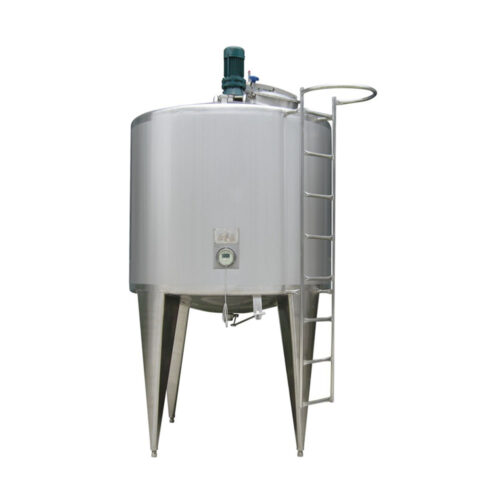
A typical fermentation tank in 304: about $4,500 in base materials. The same tank in 316L: about $6,200. For a 10-tank dairy plant, that's $17,000 difference — significant, but trivial compared to the cost of replacing all 10 tanks in five years.
How suppliers cheat
This is the part most buyers don't know about. Stainless steel sheet looks identical regardless of grade. There are three common substitutions:
- 304 substituted for 316L: The tank wall says "316L" on the engineering drawing. The actual sheet is 304. Saves the supplier ~30% on materials. You won't know until 18 months later when pitting starts.
- 304 substituted with cheaper "201" grade: 201 looks like 304 but has lower nickel and higher manganese. Cheaper, magnetic, and corrodes much faster. Common in low-end equipment.
- "304" sheets with non-conforming chemistry: Real 304 with carbon below 0.08%. Cheap "304" with carbon up to 0.15%. The high-carbon variant is more prone to chromium-carbide precipitation at welds, leading to corrosion at every weld seam after a few years.
How to verify
Three things to ask for in your contract:
- Mill certificates (3.1 EN 10204): The original certificate from the steel mill, showing chemistry analysis for each batch of sheet used in your equipment. Tie batch numbers back to specific tanks. Real suppliers can provide this within a week.
- PMI (Positive Material Identification) testing on delivery: A handheld XRF analyzer can verify the chemistry of any piece of stainless in 5 seconds. Cost about $80 for a full line check by a third-party inspector. Cheap insurance.
- Hardness and ferrite testing on welds: Same inspector, same visit. Verifies welds were done correctly with the right filler material.
If a supplier resists providing mill certificates or refuses to allow PMI testing, walk away. Honest fabricators are proud of their material chemistry — it's the easiest part of the contract to comply with.
The simple decision rule
Default to 304. Upgrade to 316L for any product-contact part exposed to: pH below 4.5, salt above 1%, or any chloride source. When in doubt, ask the supplier to specify which parts are 304 and which are 316L on a parts-by-parts breakdown — and compare against this guide.
Have a question about your project?
Tell us your target capacity and product spec — we'll come back with a sized line and budget within 24 hours.