How to Choose a Yogurt Production Line: A 2026 Buyer's Checklist
Capacity, voltage, fermentation type, packaging format — five technical decisions that decide whether your yogurt plant runs smoothly or limps along. A practical checklist for buyers in Africa, MENA and Latin America.
You've decided to invest in a yogurt production line. Before you sign anything — even before you ask for quotes — you need to nail down five technical decisions. Get them wrong and you'll be paying to retrofit equipment six months after commissioning. Get them right and the line will run smoothly for fifteen years.
1. Capacity: be honest about today and tomorrow
Most buyers oversize. They quote a 5,000 L/h line because they "want room to grow," then run it at 1,200 L/h for three years — burning energy and CIP chemicals on equipment that's mostly idle.
The honest sizing is: plan for 130% of your year-one demand, not your five-year projection. Yogurt equipment scales linearly — you can almost always add a second line later much cheaper than running an oversized one badly.
- Small / artisanal: 500–1,000 L/h. Single fermentation tank, batch pasteurizer.
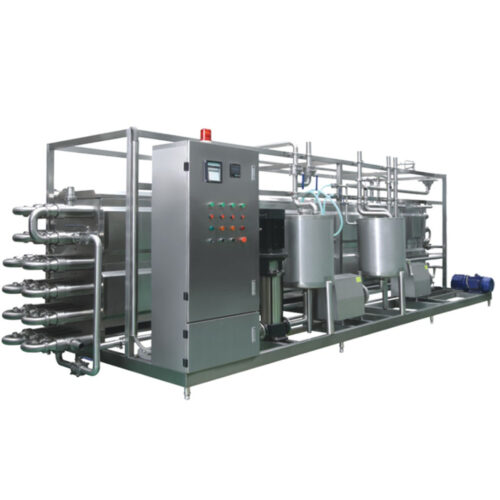
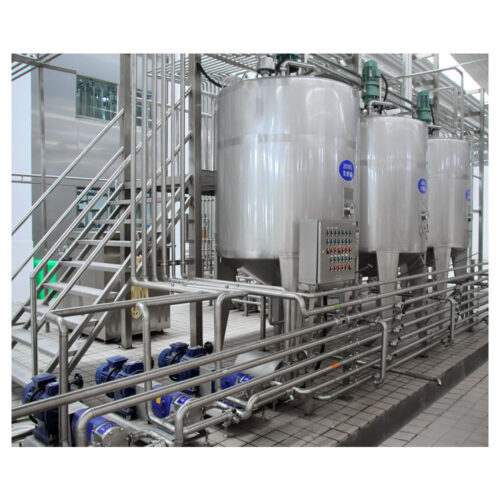
- Regional brand: 2,000–5,000 L/h. Two to four fermentation tanks, plate pasteurizer.
- National scale: 8,000–15,000 L/h. UHT-grade pasteurization, multiple parallel fermenters.
2. Fermentation type: tank or in-pack?
This decides your packaging — not the other way around. Two flows:
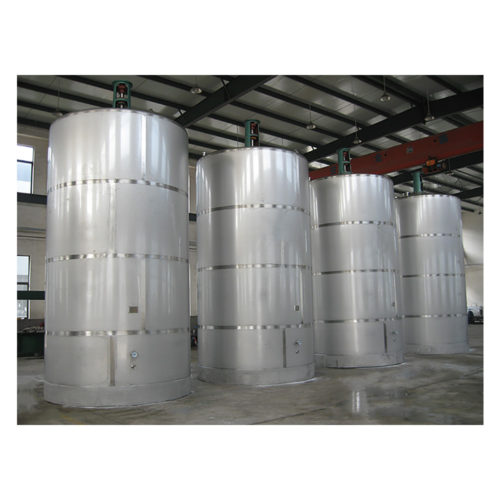
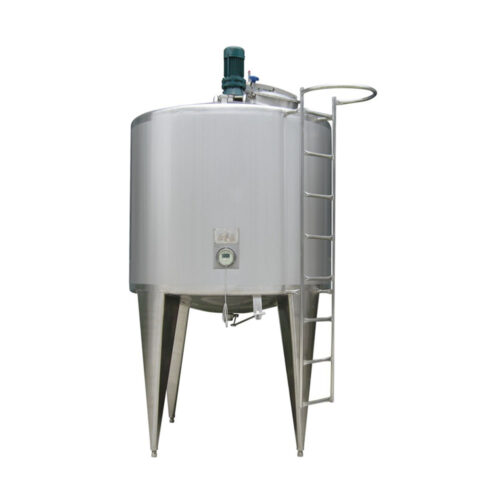
Tank fermentation (set-style yogurt): Milk goes into a fermentation tank, ferments for 4–6 hours, then is cooled, stirred, and pumped to the filler. Used for stirred yogurts, drinking yogurts, fruit-on-bottom in pots.
In-pack fermentation (Greek/firm style): Hot milk + culture is filled into final cups, then the entire pallet of cups goes into a fermentation room for 4 hours. Cups come out set firm. Used for thick set-style and Greek-style yogurt.
The two flows need completely different downstream equipment. Decide first.
3. Pasteurization: HTST or full UHT?
HTST (72–95 °C, 15–300 seconds) is enough for fresh yogurt with 21–28 days shelf life under refrigeration — the standard for yogurt. UHT (135–145 °C, 4 seconds) is only needed if you're producing ambient-stable drinking yogurt for markets without cold chain.
UHT equipment costs roughly 3× more than HTST. Don't pay for it unless your distribution genuinely requires ambient stability.
4. Voltage and frequency: don't get caught
This sounds obvious, but it's the single most common pre-commissioning surprise. Confirm with your power utility — and put it in writing in your purchase contract:
- Three-phase voltage at the equipment connection (220 V, 380 V, 415 V, 440 V, 480 V?)
- Frequency (50 Hz or 60 Hz)
- Whether you have a stable neutral
Equipment built for 380 V/50 Hz will not run on 480 V/60 Hz, or vice versa. The motors, contactors and PLC all need to be specified at order time.
5. Packaging format: the most expensive afterthought
Cup, bottle, pouch, or bag-in-box — the filler is often the single most expensive piece of equipment in the line. It also has the longest lead time and is hardest to swap out later.
Decide your final-pack format before you ask for a quote. Better still, decide the cup or bottle dimensions, lid type, and label style — because the filler tooling is built around them.
If you can't decide on packaging yet, get the upstream line built first (reception → pasteurization → fermentation), and add the filler later. We've done this for buyers in Nigeria and Ghana.
The shortcut
If you're feeling overwhelmed, do this: write a one-page brief that includes target capacity, set or stirred yogurt, voltage, packaging format, and any local regulations — then send it to two or three suppliers and compare the responses. The quality of the response tells you a lot about who you're dealing with.
Have a question about your project?
Tell us your target capacity and product spec — we'll come back with a sized line and budget within 24 hours.